
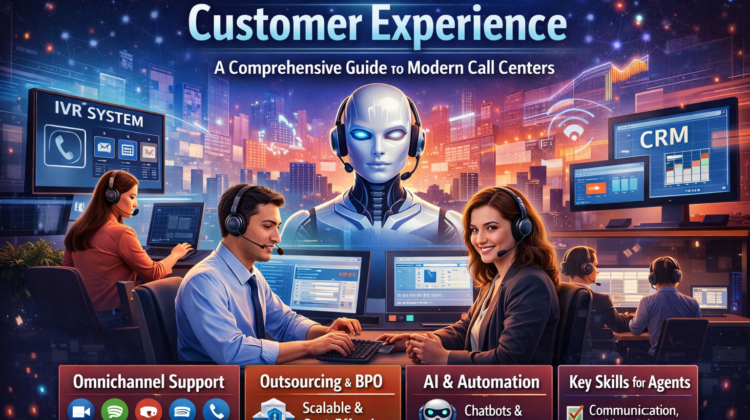
The Future of Customer Experience: A Comprehensive Guide to Modern Call Centers
In today’s fast-paced digital economy, the call center remains the heartbeat of customer satisfaction and business growth. No longer just a room full of phones, modern call centers have evolved into sophisticated Business Process Outsourcing (BPO) hubs that leverage AI, data analytics, and omnichannel support to provide seamless service.
1. What Defines a Modern Call Center?
A modern call center is a centralized office used for receiving or transmitting a large volume of enquiries by telephone. However, the industry has shifted toward the Contact Center model, which integrates:
- Inbound Services: Handling customer support, technical help, and order processing.
- Outbound Services: Focusing on lead generation, market research, and telemarketing.
- Omnichannel Support: Engaging via email, live chat, social media, and SMS.
2. The Role of BPO in Business Scaling
Many companies outsource their operations to specialized firms to reduce overhead costs while maintaining high service standards. Strategic outsourcing allows businesses to:
- Focus on Core Competencies: Letting experts handle the customer queries.
- 24/7 Availability: Providing round-the-clock support across different time zones.
- Cost Efficiency: Reducing the need for in-house infrastructure and training.
3. Key Technologies Driving Efficiency
To stay competitive, call centers are adopting cutting-edge tools:
- Interactive Voice Response (IVR): An automated telephony system that interacts with callers before routing them to an agent.
- Customer Relationship Management (CRM): Software like Salesforce or HubSpot to track customer history.
- Artificial Intelligence (AI): Using chatbots for instant resolutions and voice analytics to monitor call quality.
4. Essential Skills for Call Center Professionals
Success in this industry requires a blend of technical knowledge and soft skills:
- Effective Communication: Clear, concise, and empathetic verbal skills.
- Problem-Solving: The ability to think on your feet and resolve issues quickly.
- Technical Literacy: Proficiency in using specialized software and hardware.
- Patience and Resilience: Handling high-pressure situations with a positive attitude.
5. Best Practices for Call Center Management
For a call center to be truly professional, it must prioritize Quality Assurance (QA). This involves:
- Regular Training: Keeping agents updated on product changes and communication etiquette.
- Performance Metrics: Tracking KPIs like Average Handle Time (AHT) and First Call Resolution (FCR).
- Employee Engagement: Ensuring a healthy work environment to reduce turnover rates.
Conclusion
As businesses continue to digitalize, the human element provided by call centers remains irreplaceable. By combining advanced technology with skilled professionals, call centers are not just solving problems—they are building lasting relationships between brands and customers.